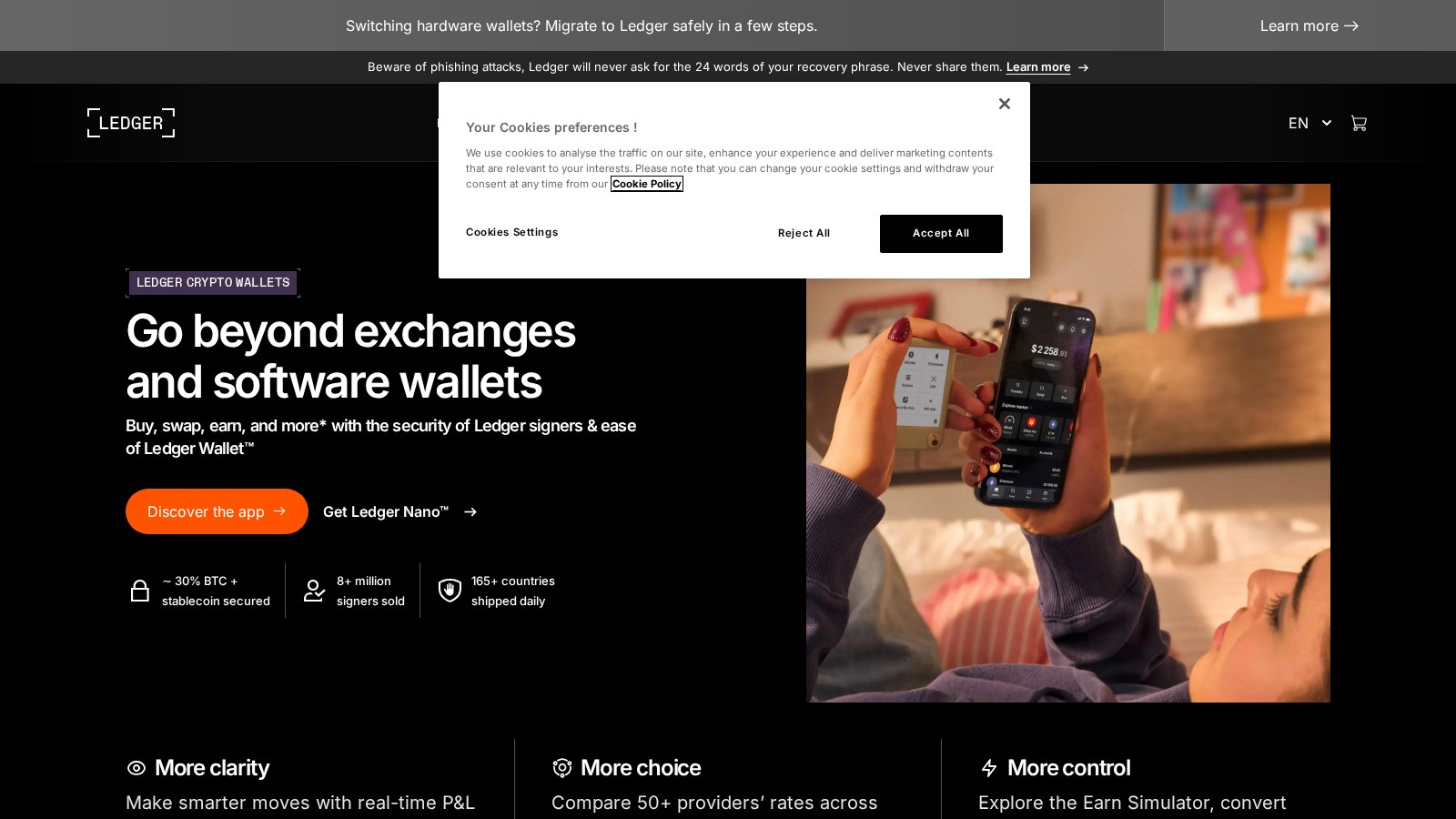
The Nano X remains the device most newcomers are handed, and there are good reasons for that. Setup is guided, Bluetooth pairing to the phone app works reliably, and the range of supported assets is wider than any competitor at the price.
We restored an existing seed, sent and received across four chains, and verified transaction details on the device screen. Address confirmation is legible and the two-button confirmation pattern is hard to fumble.
Ledger Live has improved. Portfolio tracking, staking and swap routing are integrated, and the firmware update flow no longer feels like a risk. Third-party integrations are the deepest in the category, which matters when a wallet or protocol only ships one hardware path.
The reservations are structural. The secure element firmware is closed source, so users are trusting attestation rather than review. The optional key-recovery service, however carefully engineered, changed the mental model of what a device holding a seed can be asked to do, and a portion of the security community has not returned.
The small screen also strains under complex contract interactions. Clear signing has improved for common cases, but for anything unusual you are still verifying an abbreviated payload.
For someone holding a mixed portfolio who wants one device that works with everything, it is still the practical answer. For a purist optimising for auditability, it is not.